
'Our research shows that 60 per cent of the growth and interest in anime will come from India for the next few years.'

Existing optimism about the capital goods sector has been enhanced by the Assembly election results, which were favourable for the BJP. The prospects of political continuity led to renewed interest in the sector. There are demand-supply gaps, especially in power, and visibility of improved pricing and strong order flows, including from private enterprises.
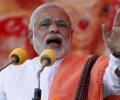
India will witness good growth under the present government.

India has been relatively insulated from the severe headwinds in the West. However, with a third of the global economy expected to slip into recession in calendar year 2023, the impact will strongly be felt on India's exports and trade economy, leading economists said in a panel discussion at the Business Standard BFSI Insight Summit in Mumbai on Wednesday. The panel comprised former Reserve Bank of India executive director and former Monetary Policy Committee member Mridul Saggar, State Bank of India Chief Economic Advisor Soumya Kanti Ghosh, Citibank India Chief Economist Samiran Chakraborty, ICRA Chief Economist Aditi Nayar, and IndusInd Bank Chief Economist Gaurav Kapoor. The topic of the panel discussion was No recession in sight: Is India decoupled from developed economies?

Two full-fledged semiconductor fabrication plants are going to come up in India very soon entailing multi-billion dollar investment besides several chip assembly and packaging units, Minister of Electronics and IT Rajeev Chandrasekhar said. In an interview with PTI, the minister confirmed that the two projects include a $8 billion proposal submitted by Israel-based Tower Semiconductors and the other from Tata Group. "I am happy to share this with you and you are probably the first one I'm sharing this with.

This year is set to be the third consecutive year when India's share of IPOs has fallen relative to the rest of the world.

At the heart of Paytm's slide lies the abject failure of its Super App strategy, notes Indrajit Gupta.

Prime Minister Narendra Modi has said that India's economic growth is a 'natural by-product' of his nine-year-old government's political stability, as he expressed optimism that it will be a developed nation by 2047 with 'corruption, casteism and communalism' having no place in our national life.
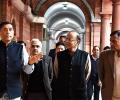
'The macro-economic stresses -- high interest rates, rupee depreciation and capital flows -- have receded now.' 'Interest rates have come down, inflation is down and the rupee has bounced back.' 'If oil prices continue at this level, there will be no vulnerability.' 'Growth is a different story.'

So is India actually growing? Is the growth real or imaginary?

Prime Minister Narendra Modi on Friday said both public and private sectors need to leverage synergies and think out of the box to seize opportunities arising as a result of the emerging global environment. While interacting with noted economists and experts at NITI Aayog ahead of the Union Budget, the prime minister also applauded the success of the India Digital story and the rapid adoption of fintech across the country, an official statement said. During the meeting, economists offered suggestions on ways in which India can sustain its development momentum, it added.

Proactive measures adopted by BMC reduced COVID-19 growth rate to 4.3 per cent in May 2020 & further to 1.02 per cent in June. These measures also ensured an improved case doubling time to 43 days in May 2020 and 78 days in June 2020.
Amidst the anguish about corruption -- and, one might add, the dirty tricks unleashed against those campaigning on the issue -- people have tended to forget that the big story in India, the truly exciting story, remains rapid economic growth.

While green shoots are beginning to emerge, with June sales rebounding to pre-Covid levels thanks to a rural revival, most FMCG chief executives have voiced concerns about localised lockdowns that began in July and have extended into August in some states.

India's Rs 4.5-trillion fast-moving consumer goods (FMCG) sector was one of the first to bounce back from the lockdown induced blues, reporting a year-on-year (YoY) growth in the October-December quarter last year. That said, the overall consumption figures continue to remain depressed. The FMCG market, which includes daily consumables like branded atta, hand sanitizers, edible oils, shampoos, razors, and so on, recorded 7.3 per cent value growth during the period, while the smartphone market grew by 21 per cent.

'Without a poverty line, how are we to know whether poverty is the same, or it has come down or it has gone up?'

US short seller Hindenburg Research has rejected Adani Group's charge that its report was an attack on India, saying a "fraud" cannot be obfuscated by nationalism or a bloated response that ignored response to key allegations. Commenting on the 413-page response Adani Group released late on Sunday evening in response to its report, Hindenburg said it believed India was a vibrant democracy and an emerging superpower with an exciting future and it was Adani Group which was holding it back through "systematic loot". Hindenburg stood by its last week's report that said its two-year investigation found Adani Group "engaged in a brazen stock manipulation and accounting fraud scheme over the course of decades".

'Sector funds like IT funds should be included only in the satellite portfolio.' 'Limit your exposure to IT sector funds to around 5-10 per cent of your equity portfolio.'
Mark Mobius, executive chairman of Templeton Emerging Markets Group still believes in the emerging markets growth story.

The Lok Sabha contest in Thiruvananthapuram is shaping up to be a significant battle involving key candidates like Shashi Tharoor, Rajeev Chandrasekhar, and Panniyan Ravindran. This three-cornered fight highlights the political dynamics in Kerala's capital city, with each candidate bringing their own vision and promises for the region's development, notes Rajeev Srinivasan.
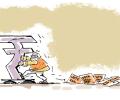
'Since the growth is not fast enough to provide jobs for the young, the fallout will be political and social,' warns T N Ninan.

Uttarakhand saw the sharpest decline (of 11 per cent) in the "total persons engaged" in manufacturing in the worst-hit pandemic year of 2020-21 as industrial units shut shop, according to the latest Annual Survey of Industries (ASI) data, released by the Ministry of Statistics and Programme Implementation (MoSPI). This was followed by the decline in the workforce in states such as Jharkhand (8.9 per cent), West Bengal (8.3 per cent), Kerala (8 per cent), and Karnataka (7.8 per cent). The "total persons engaged" in an enterprise is defined as the sum of directly employed workers, supervisory or managerial workers, and the unpaid family members who might be engaged in the enterprise.
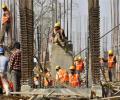
India's economy has bounced back amazingly from the Covid-19 pandemic and nationwide lockdown over the last one year, but it is not out of the woods yet, according to the World Bank, which in its latest report has predicted that the country's real GDP growth for fiscal year 21/22 could range from 7.5 to 12.5 per cent.
The United Progressive Alliance's (UPA) growth story is far from truth and is mere a statistical jugglery.

'We have not seen too many large deals compared to last quarter.'
The sustainable competitiveness report measures of the responsible growth of a state.

'The untimely demise of Shri Cyrus Mistry is shocking. He was a promising business leader who believed in India's economic prowess,' Prime Minister Modi said in a tweet.

Undeterred by the stock market volatility, uncertainty due to the Ukraine-Russia war and high inflation, equity mutual funds continue to remain attractive choice for investors for the 15th straight month, registering a net inflow of Rs 18,529 crore in May on robust SIP numbers. This was higher than Rs 15,890 crore net inflow in April, data from the Association of Mutual Funds in India (AMFI) showed on Thursday. Equity schemes have been witnessing net inflow since March 2021, highlighting the positive sentiment among investors.

There are good reasons to believe that India is at the start of a long period of growth for equities.

Trade generic drugs (medicines that are sold directly through distributors) are fast becoming a key segment for domestic pharma firms as volume growth slows in the overall market. Big companies like Cipla and Alkem have a significant presence in the segment but recently, players like Torrent Pharmaceuticals and Dr Reddy's Laboratories (DRL) have also entered this market. What is driving big pharma's focus on trade generics? The volume growth in the Indian Pharma Market (IPM) has come down from 5.6 per cent in FY16 to 0.1 per cent in FY23.

The Aditya Birla Group announced the merger of its two holding companies, Aditya Birla Nuvo and Grasim, to make the holding structure clearer, ensure stable cash flows and unlock value in its financial services arm

In August 2021, Nick Read, chief executive of Vodafone Plc at the time, did not mince his words while speaking about the India business in an earnings call. Replying to an analyst's question on Vodafone Idea, a venture with the Aditya Birla Group that had piled on huge debts and worrisome losses, Read described it as a highly stressed situation that "they (Vodafone Idea) are trying to navigate... "We, as a group, try to provide them as much practical support as we can, but I want to make it very clear, we are not putting any additional equity into India.''

Macroeconomic data announcement, Omicron situation and global trends will be the major driving factors for the equity market in the first week of the new year 2022, according to analysts. In what turned out to be a historic year, the Indian stock indices went past multiple milestones and the 30-share Sensex made an annual gain of 10,502.49 points or 21.99 per cent in 2021. Religare Broking Vice-President (Research) Ajit Mishra said, "This week marks the beginning of a new month and participants will be closely eyeing some crucial high-frequency data like monthly auto sales, India manufacturing PMI and India services PMI. "Besides, updates on the COVID-19 situation and performance of global markets will also be critical."

There is a significant amount of dispersion in the growth rates across different industries.

'If because of El Nino, the monsoon is affected adversely in the current year, naturally it will affect income projections and consequently Budget numbers.'
The company is racing ahead of its peers even as other sectoral players feel the slowdown heat.
Increasing US shale gas production should stabilise oil prices, in contrast to the spike of the past.

Congress Vice President Rahul Gandhi on Thursday delivered his much-awaited speech at the annual general meeting at the Confederation of Indian Industry.

Budget expectations of rural infrastructure sector.

'Why should we disclose classified information to satisfy those who doubt our Hydrogen Bomb capability?'
